- This Is Who We Are
- This Is Who We Are
- 40 Years
- Purpose and Values
- Products
- Innovation
- Science
- Quality and Environment
- Blog
- Global Network
- Compliance
- People and Talent
- Facilities
- Contact
- Work with us


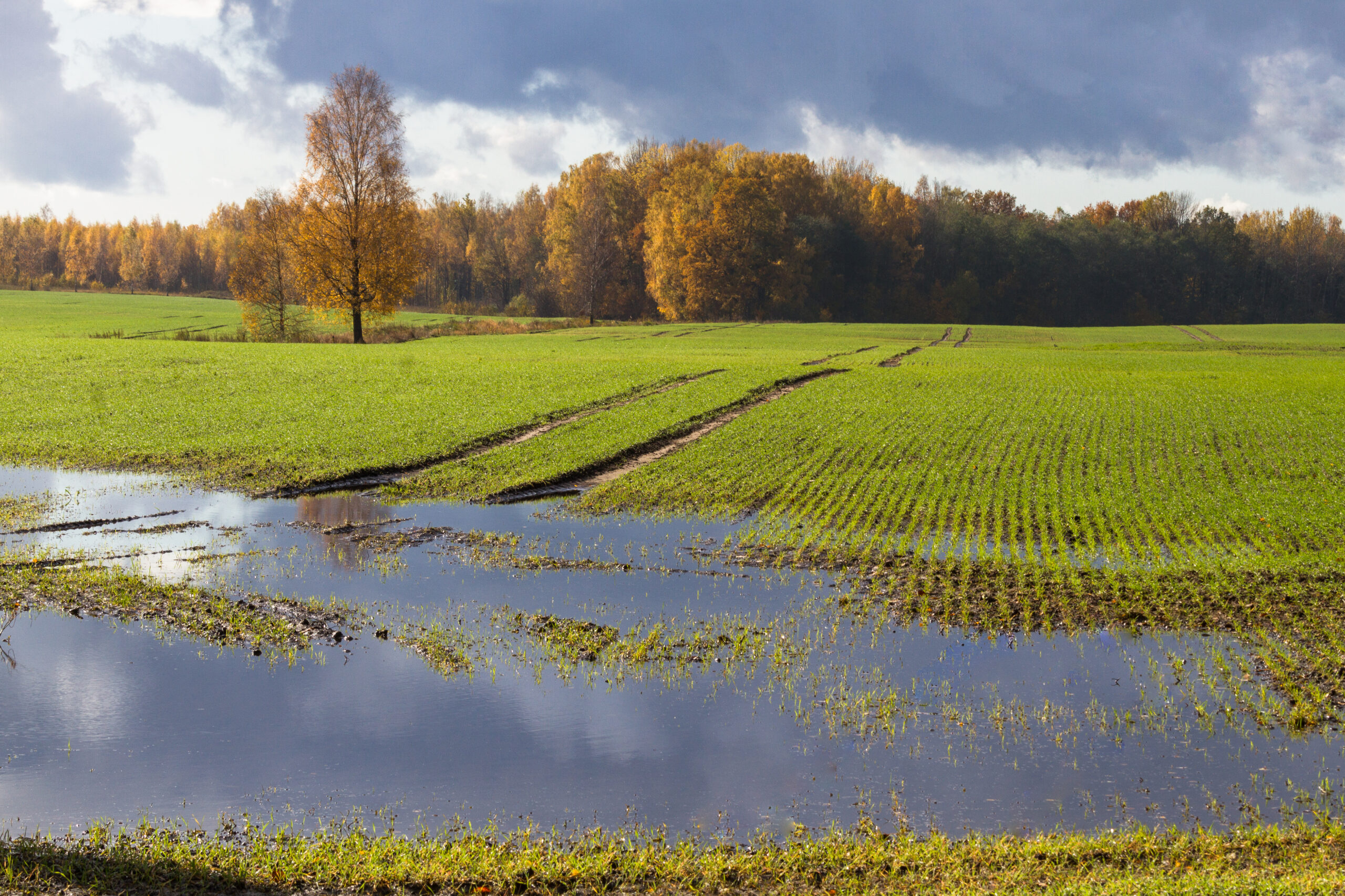
Extraordinary rainfall in Spain and its consequences for crops
Partial or total losses?
In flood situations, what most commonly occurs is a combination of both types of loss. In some cases, partial losses are reported due to quality deterioration, higher discard rates, fruit drop, harvest delays, or disease incidence. However, in plots affected by persistent flooding that remain underwater for several days, total losses may occur due to root asphyxia, rotting, and plant death. Thousands of hectares have already been declared agricultural disaster areas, with provisional economic losses amounting to tens of millions of euros nationwide.
Beyond the figures, however, the most widespread impact has been less visible but equally significant: crop physiological stress.
Excess rainfall: a less visible stress than drought, yet highly relevant
Water is essential for plant life, but excess water also becomes a stress factor when it exceeds the soil’s infiltration and drainage capacity. Under saturated conditions, multiple problems arise:
Root asphyxia: when soil is saturated, pore spaces fill with water, reducing the oxygen available to roots.
Nutritional, physiological imbalances and diseases: nutrient uptake becomes limited, and imbalances may occur due to the leaching of mobile elements. Excess water can also disrupt plant hormone balance and reduce fruit quality in sensitive crops. Furthermore, constant moisture favors the development of pathogens and increases the incidence of fungal diseases such as crown and root rot.
Delays and losses in field operations: continuous rainfall prevents field access, delays sowing and fertilization, and hinders key practices such as thinning or phytosanitary treatments from being applied at the appropriate time, with medium- and long-term consequences for overall productivity.
Under these conditions, plants enter a state of abiotic stress caused by anoxia, reducing metabolic activity and slowing growth due to decreased nutrient uptake capacity. Even once the soil drains, crops must rapidly reactivate their root systems to avoid losing productive potential, and it may take weeks to restore physiological balance.

Which crops have been most affected?
Damage assessments frequently mention certain crops: citrus, berries, open-field vegetables, olive groves, cereals, woody crops, and subtropical species such as avocado. Among these, cereals deserve special attention.
Autumn-sown row crops such as wheat, barley, and oat are in winter in the establishment, tillering, or early stem elongation stages, depending on sowing date and region. At this point, root development is crucial in determining final yield potential.
Agronomic and economic impact
In cereals or row crops, damage is not always immediate or total but may result in widespread yellowing, fewer fertile stems, reduced deep root development, uneven crop growth, or delays in top-dressing fertilization due to limited field access. In addition, nitrogen efficiency losses (through leaching or denitrification) and increased fungal disease pressure are common. All of this can lead to partial plant loss and therefore lower effective plant density. In poorly drained plots, these losses may be localized but significant, directly affecting yield per hectare.
In extensive crops, where profit margins are tight, even a moderate yield reduction (5–15%) can have a substantial economic impact.
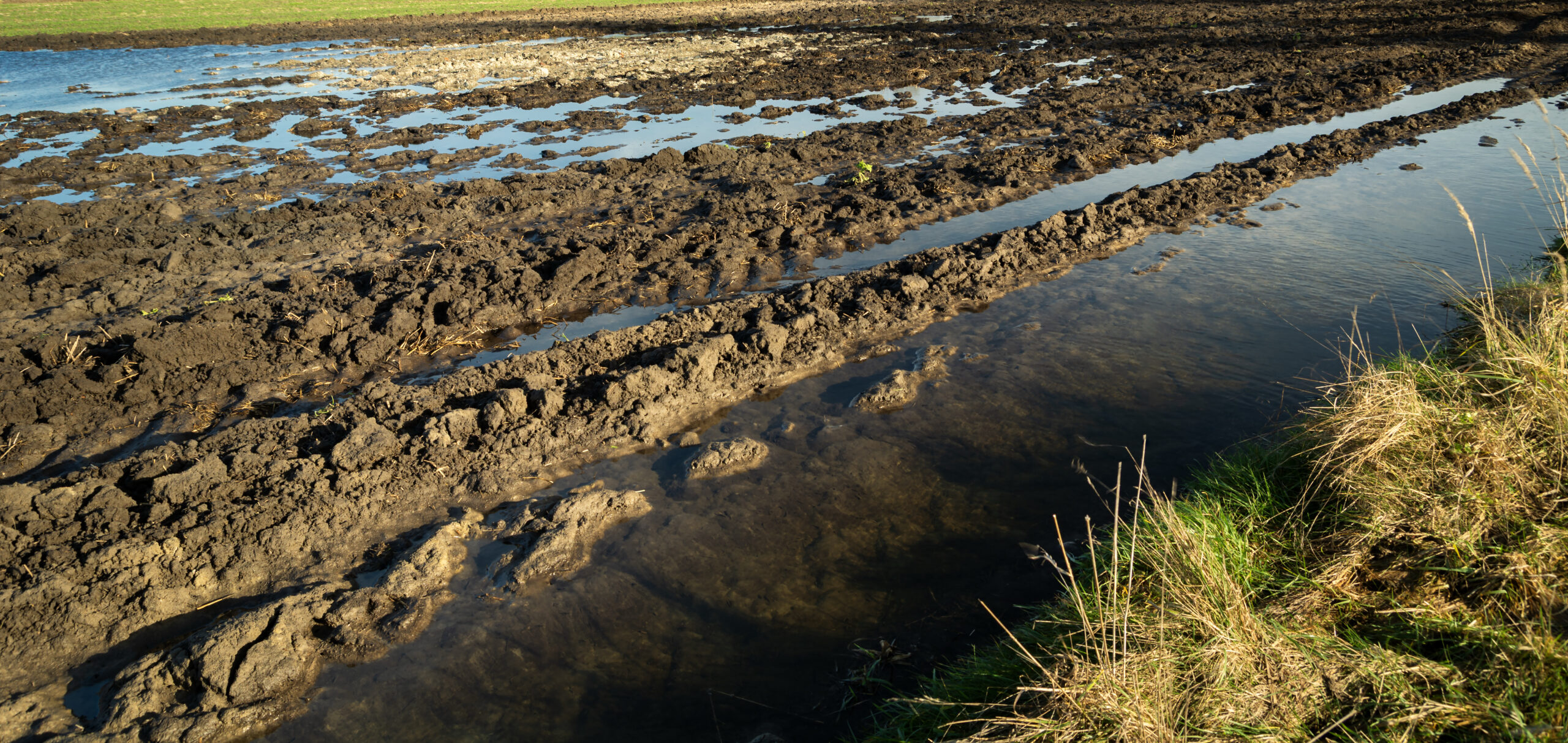
How to support row crops after waterlogging?
In situations such as those experienced in recent weeks, several agronomic measures can be considered to improve crop condition and recovery capacity. These include improving drainage and soil management, increasing organic matter to enhance infiltration and drainage rates, adopting minimum or conservation tillage practices, using cover crops or mulch, and monitoring and adjusting inputs accordingly.
It is also crucial to manage crop stress and support recovery to minimize productivity losses as much as possible. Reactivating the root system and promoting soil metabolic and biological activity are key. Plants subjected to prolonged saturation may exhibit physiological stress even after water levels recede. Prioritizing root recovery, stimulating the balance between water and nutrient uptake, encouraging physiological reactivation, and strengthening resilience against opportunistic threats are essential steps toward restoring vigor and productivity.
In cereals specifically, following intense rainfall events it is important to:
- Assess root system status before planning fertilization.
- Adjust top-dressing nitrogen applications considering possible leaching losses.
- Avoid additional soil compaction.
The role of microorganisms and biostimulants in recovery after excess water
Supporting crops at critical moments through the use of specific microorganisms and biostimulants is essential to restore vigor and prevent productivity decline.
After weeks of saturation, the soil’s microbiological balance may be altered. Anaerobic conditions modify microbial populations and can reduce the activity of beneficial microorganisms. In this context, solutions based on microbial consortia can help reestablish biological activity in the rhizosphere and promote root recovery. The combined use of compatible mycorrhizae and Trichoderma species is fundamental to achieving a healthy microbiota, enhancing root regeneration, and stimulating growth under stress conditions. Likewise, specific biostimulants capable of boosting crop resilience may make a significant difference. In this context, Atlántica Agrícola proposes two solutions: Atlanticell Trichomix and Archer Force.
Climate variability and its impact on agriculture
The intense and prolonged rainfall that Spain has experienced in recent months clearly demonstrates that modern agriculture must adapt to increasingly variable climate scenarios driven by climate change. Periods of prolonged drought may alternate with episodes of extreme precipitation and irregular accumulation. Cropping systems therefore require more flexible and resilient management strategies.
Adopting a combination of good soil management practices, appropriate drainage, nutritional monitoring, and support for plant physiology is essential to limit the impact of such events, preserve farm profitability, and strengthen agricultural resilience against future climatic challenges.
Because producing under optimal conditions is important, but knowing how to manage crops when conditions are no longer optimal is just as crucial.


Subscribe to our newsletter

