- This Is Who We Are
- This Is Who We Are
- 40 Years
- Purpose and Values
- Products
- Innovation
- Science
- Quality and Environment
- Blog
- Global Network
- Compliance
- People and Talent
- Facilities
- Contact
- Work with us


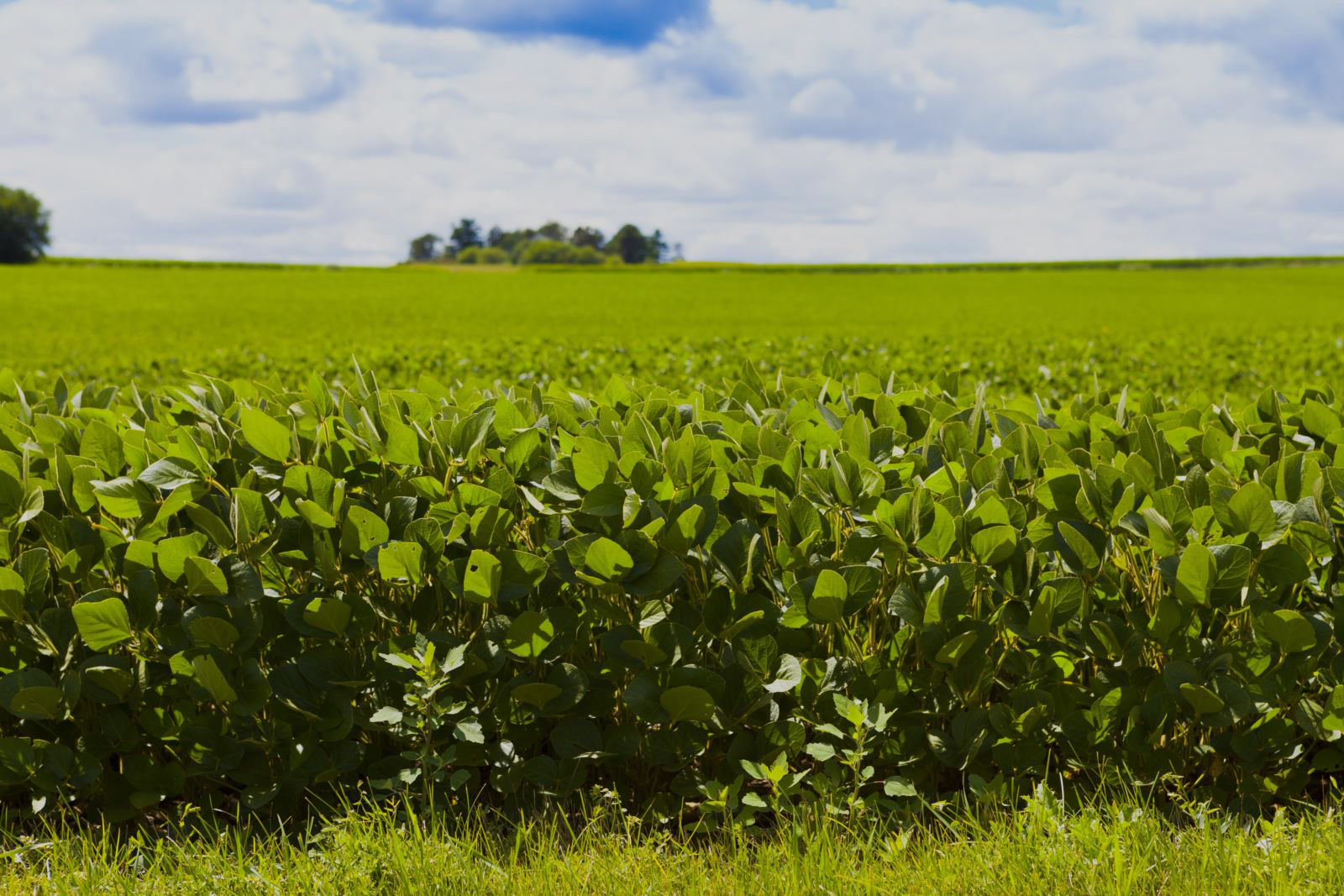
Alert in soybeans, corn, wheat and rice: the new environmental pattern cutting margins in Paraguay
The new challenge: atypical environmental conditions that are no longer an exception
Although production data are encouraging, the reality is that farmers are now working under a scenario of climatic uncertainty. The last decade shows a clear trend:
- More prolonged drought periods.
- Intense and poorly distributed rainfall.
- High temperatures during flowering or grain filling.
- Out-of-season frosts.
- Areas with salt accumulation due to insufficient drainage or irrigation.
These situations are no longer “isolated cases”; they are part of the new production context and directly affect crop physiology.

Why does abiotic stress reduce crop yields so much?
The reason is simple: crops are living organisms with physiological limits.
When conditions exceed those limits — even for just a few days — the plant shifts from “growth mode” to “survival mode” when it detects stressful environmental conditions.
At the internal level, terrestrial plants are constantly exposed to multiple external factors — salinity, drought, heat, cold, radiation and nutrient deficiencies — which trigger what we know as abiotic stress. This stress causes adjustments aimed at adapting to unfavorable conditions, from gene expression to physiology, including plant architecture, primary metabolism (photosynthesis, respiration) and secondary metabolism (defense compounds, antioxidants and growth regulators).
When intense drought or heat stress occurs, for example, the production of reactive oxygen species (ROS) increases in plant tissues. These highly unstable molecules react with lipids, proteins and nucleic acids, damaging membranes, chloroplasts and key enzymes involved in photosynthesis, disrupting many internal processes. Plants have antioxidant systems (enzymes such as SOD, CAT, peroxidases…) to neutralize part of this damage, but when stress is intense or prolonged, these systems become saturated and plant physiology is impaired.
In addition, the complexity of the plant response depends on the duration and intensity of the stress, the genotype (not all varieties respond in the same way), the phenological stage of the crop (flowering and grain filling are extremely sensitive), the affected tissue, or the combination of several stress factors at the same time (for example, heat + water deficit).
In the field, this translates into:
- Lower photosynthesis → less energy for grain production.
- Reduced root growth → less access to water and nutrients.
- Reduced flowering and fruit set → fewer ears, rows or pods.
- Shorter and accelerated grain filling → lighter grains.
- Greater susceptibility to diseases and pests.
The main problem is that stress often does not produce immediate visible symptoms, but leaves its mark at the end of the season in the form of fewer kilos of grain, lower yield and quality, and therefore reduced crop profitability.
How do these stress conditions affect each crop?
Soybeans
Soybeans are particularly sensitive to water deficit and heat between R1 and R5 (flowering and pod filling). During these stages, the plant requires very active photosynthesis and a constant water supply to sustain pod set and grain filling.
When water is scarce, stomata close to reduce transpiration losses, but this also limits CO₂ intake and reduces the photosynthetic rate. Internally, the activity of key photosynthetic enzymes is altered, ROS levels increase and damage chloroplasts and membranes. Cells are damaged and senescence accelerates, leading to flower and pod abortion and therefore a lower number of grains per plant.
During stages R1–R5, these effects result in:
- Flower and pod abortion,
- Reduced nodulation and lower biological nitrogen fixation,
- Lighter grains and reduced thousand-grain weight.

All of this leads to reduced plant development, less filled pods and harvested seeds of lower quality, ultimately resulting in lower yields. Even when rainfall returns, the damage is already done and yield potential does not always recover.
Corn
Corn has very clearly defined critical windows. At V6–V8, the potential number of kernel rows per ear is determined; at VT–R1, pollination takes place. Heat stress or water deficit can cause severe yield losses, resulting in uneven ears with “gaps” or underdeveloped kernels due to:
- Reduction in the number of kernel rows,
- Poor synchronization between pollen shed and silk receptivity,
- Reduced pollen viability during extreme heat events,
- Stomatal closure, reduced photosynthesis and shortened grain filling.
Wheat
Wheat combines sensitivity to excess moisture with vulnerability to extreme temperatures. When soils become waterlogged, oxygen availability in the rhizosphere decreases, nutrient uptake is reduced and the plant enters a physiological stress state that limits tillering and vigor.
Late frosts can irreversibly damage the spike before emergence, and high temperatures during grain filling accelerate leaf senescence, reducing the effective photosynthetic period.
The final effects are usually reflected in:
- Fewer fertile spikes,
- Lower test weight,
- Reduced baking quality.
Rice
Although rice grows under flooded conditions and “does not lack water”, it also suffers from abiotic stress:
- High temperatures reduce spikelet fertility,
- Excess water with insufficient biological activity limits effective nutrient availability,
- Salinity problems affect water uptake,
- Soils poor in microbiota reduce nitrogen and phosphorus efficiency.
The result is fields with lower crop uniformity and yields that do not always reflect the investment in irrigation and fertilization.

What can farmers do in the face of factors they cannot control?
Prepare the plant to better withstand stress
A plant with deep roots, high-quality soil microbiota and active physiology can withstand more days of stress without losing yield. This can be achieved through:
- Good nutrition and crop health before critical periods, to avoid stresses that can be controlled,
- Promoting deeper and more branched roots, improving water and nutrient uptake and redistribution.
- Living soils with beneficial microorganisms (mycorrhizae, PGPR bacteria, nitrogen-fixing bacteria, Trichoderma, Pochonia…), (hyperlink to Atlanticell Microorganisms archivos -Atlantica)
- Physiological support that maintains photosynthesis and keeps the plant active under potential stress.
- Establishment: greater early vigor and active roots → higher tolerance to early drought.
- Vegetative growth: stable physiology → better response to heat peaks.
- Grain filling: prolonged photosynthesis → heavier grains and more uniform filling.
In a scenario of increasing climatic instability, we cannot prevent environmental stress from occurring at unexpected moments, but we can try to minimize its impact and increase crop yields.
In this context, farmers are increasingly considering biostimulants as high-value solutions in a scenario where climate is no longer a “fixed” or stable factor, putting production at risk. They provide a strong differential value by preparing crops to tolerate stress at any stage of their cycle, which is the best way to ensure stable yields and protect income.
They do not replace other inputs, but enhance the effectiveness of any other application by improving its uptake by the plant. Therefore, a small investment in resilience can prevent major losses.
If you want to learn more about how to take your crop to the next level and discover our solutions for Paraguay, contact us

ATLÁNTICA AGRÍCOLA.
Reliable solutions. Remarkable results.


Subscribe to our newsletter

